
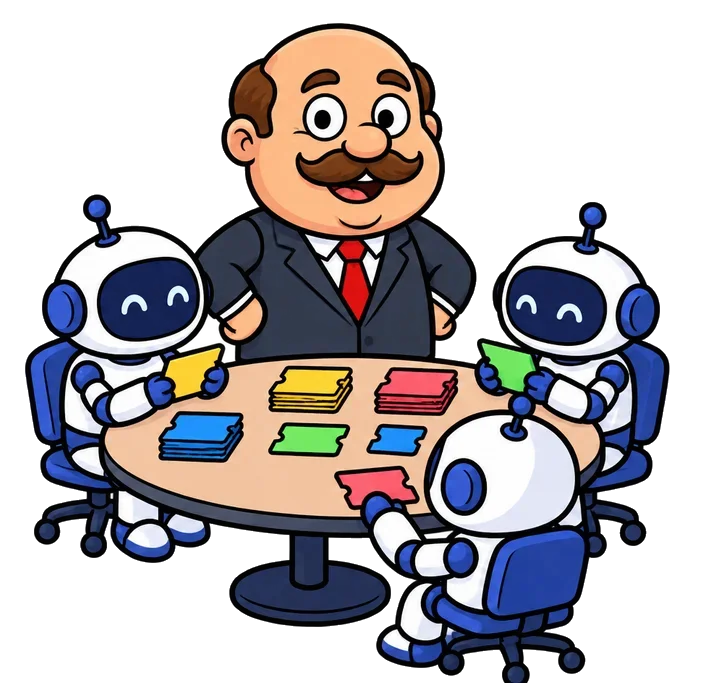
Why I built Boss Man
Given my inclination to tinker with new tech, I started learning some of the Python machine-learning tools (scikit-learn, Keras, etc.) back in 2017. I managed to develop a few useful tools, but it was tough going. Then LLMs came along. Initially they were pretty poor, but it wasn't long before they could generate code better than I could write myself. More recently agents came along and made that process even easier. A huge thanks to the developers of Hermes Agent and Paperclip, both of which have influenced my development of Boss Man.
Despite liking those tools, I did keep running into a number of frustrations. I won't list them in detail here, but essentially I wanted to be able to work with my agent teams the same way as I work with my human teams at work.
What Boss Man does differently
I wanted to try to reduce wasted tokens, so Boss Man doesn't have a heartbeat (waking agents just to check if they might be needed). Instead, a lot of that mundane checking is written into Boss Man. You can also set up a scrum master agent to help keep work flowing. Boss Man also has these, and much more:
- a kanban board per project
- cross-company engagements: one team requesting work from a different team in a formal, tracked way
- a roadmap you can share publicly
- a user feedback portal, where your users can suggest ideas and vote on what they'd like to see next
- retros: a review of the last period of work, to see how the team can improve, with actionable outcomes
And yes, after the initial three weeks of development, Boss Man is now developed fully by Boss Man. There's even a blue/green, zero-downtime deployment option. I suspect most people won't need it, but for me it's invaluable.